PETRO-FEUDALISM AND THE FIGHT FOR CLEAN AIR - STANLOW
Leon Krug - Royal College of Art, 2025/26
Exhibited at: Tallinn Architecture Biennale 2026
SYNOPSIS: Beside one of Britain’s largest oil refineries, the town of Ellesmere Port breathes air it cannot see, cannot measure, and cannot prove is harming it. The pollution is real, chronic illness, a cancer rate well above the national average, but the systems meant to hold industry to account instead defer to it, leaving residents inside a problem they have no power to challenge.
Petro-Feudalism and the Fight for Clean Air traces a journey from the abstract idea of the exclusion zone to a single refinery on the Mersey, uncovering a condition in which industrial infrastructure stops behaving like a market actor and starts behaving like a governing power. Its response is both practical and radical: a cheap, open-source sensor network that hacks public infrastructure to make invisible pollution visible, and a speculative future in which a community turns that data into legal, political, and structural change. At its heart is a simple argument, that clean air is not a privilege to be negotiated, and that the line between industry and human life should be drawn by the people who have to breathe across it.
The project is called "Petro-Feudalism and the Fight for Clean Air", but it did not begin with either petro-feudalism or Stanlow. It began with a line on a map.
EXCLUSION: Before this work turned towards a refinery on the Mersey estuary, it was concerned with a broader and stranger phenomenon: exclusion. The exclusion zone, the boundary we draw around danger, around contamination, around the places deemed unfit for ordinary human life. These zones appear objective, even scientific, but the closer we look, the less fixed they become. They change shape over time. They are communicated in wildly different ways. They expand and contract depending on which parameters are considered and which are quietly left out. And most troublingly, the thresholds that define them, the precise level of a chemical like benzene at which a place tips from "safe" to "unsafe", are not neutral facts handed down by science. They are negotiated, lobbied over, and shaped by the very industries they are meant to constrain.
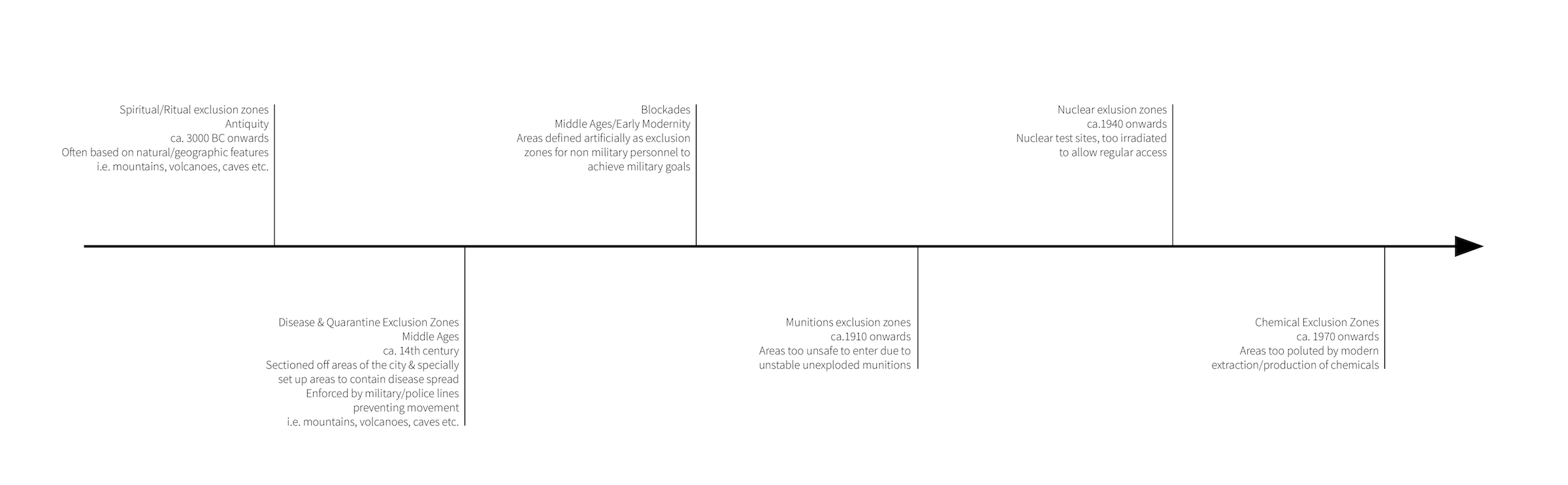
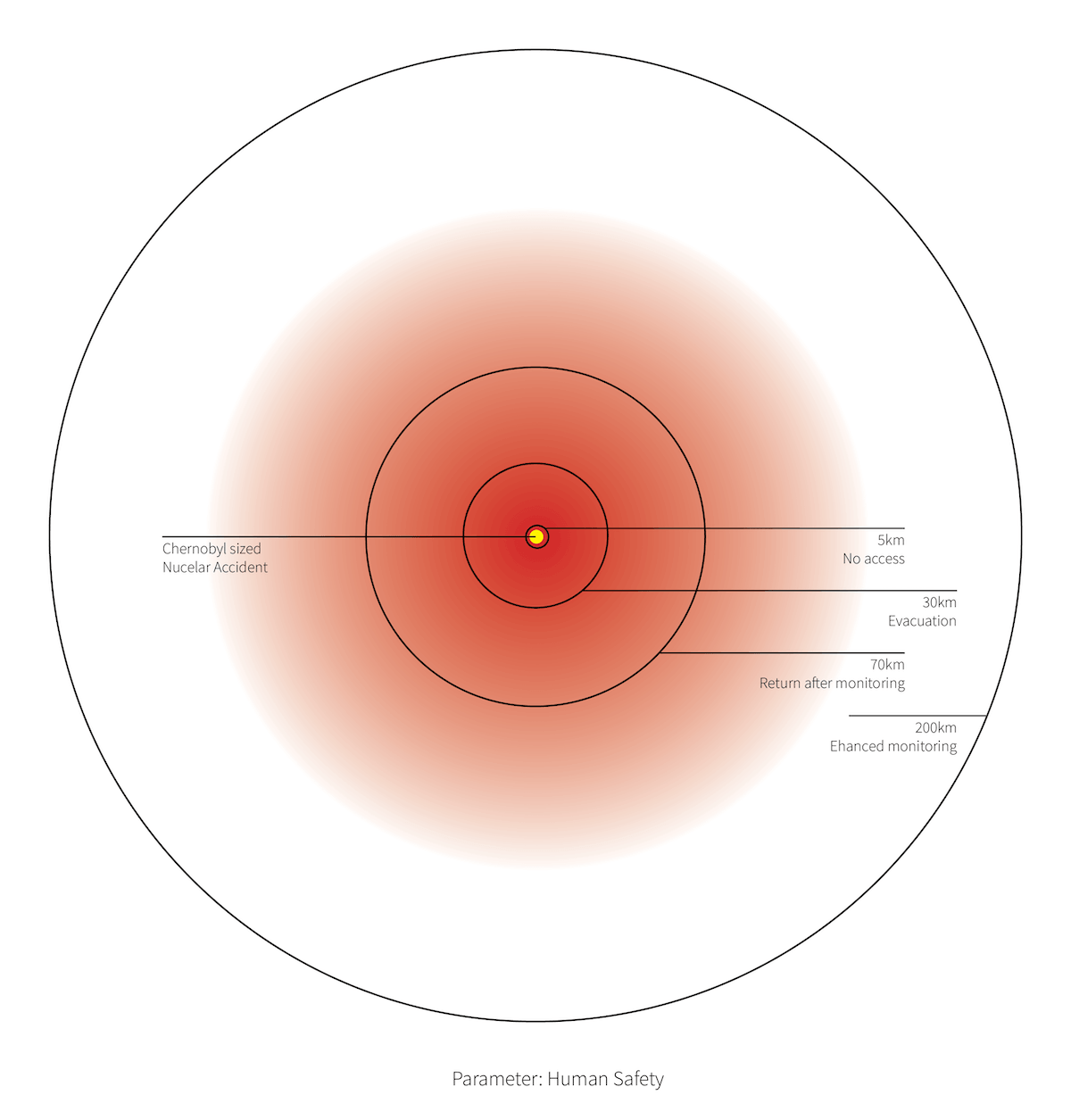
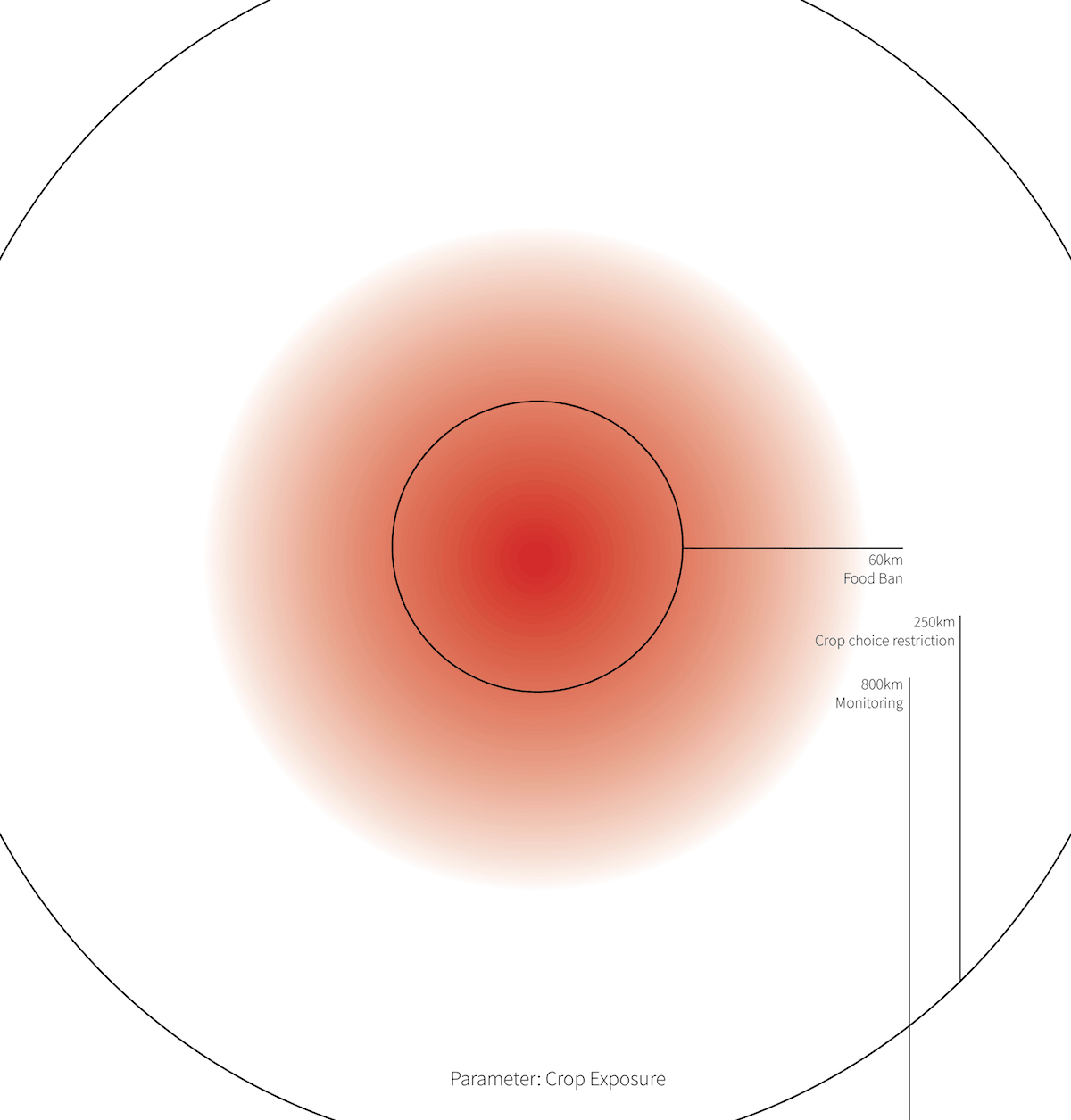
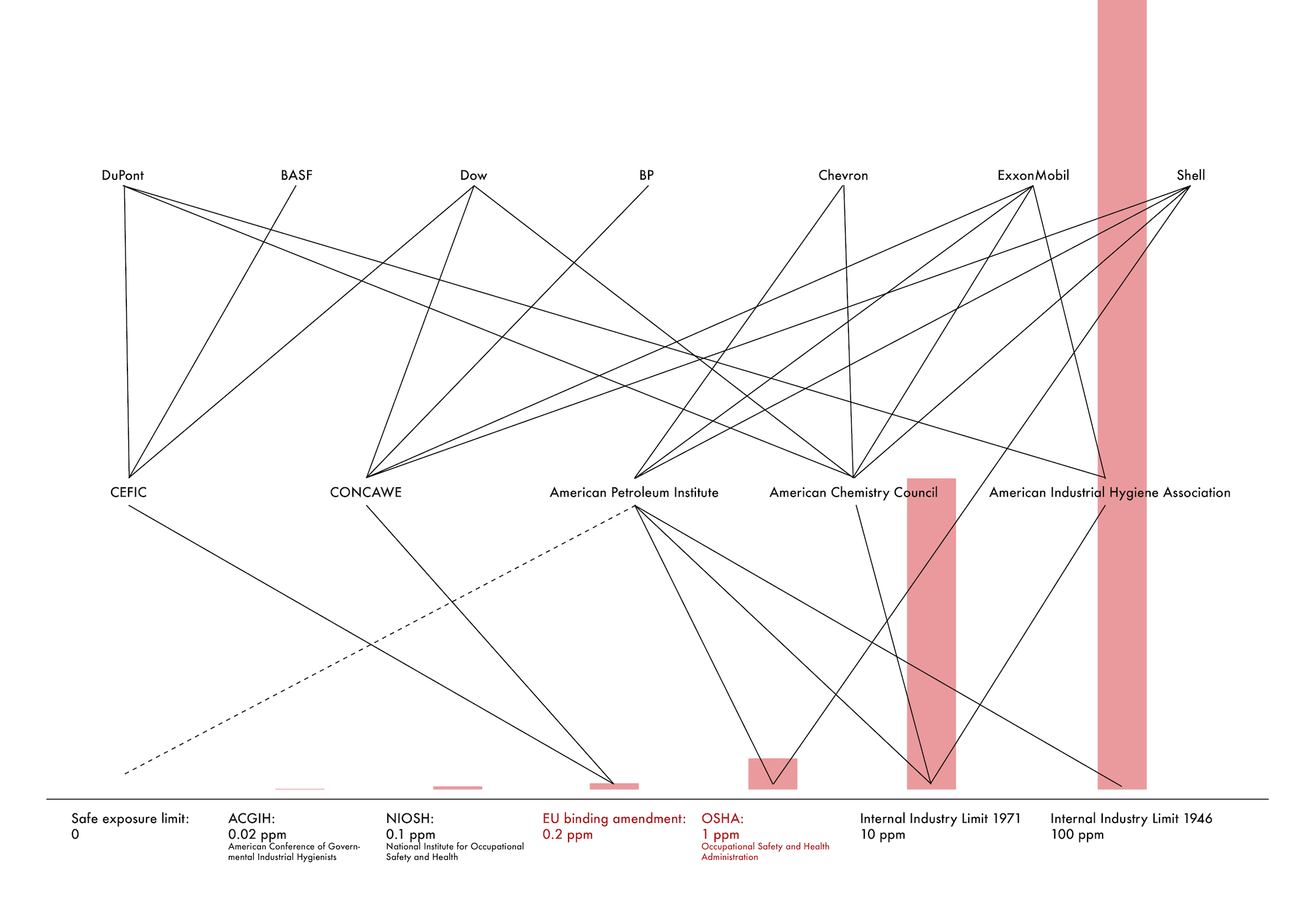
The first phase of the project took the concept of exclusion apart: how these boundaries are made, who draws them, how they are enforced and perceived, and whose interests they ultimately serve. What emerged was a single conviction that would go on to shape everything that followed: that the threshold itself is the vulnerability. The moment a system permits some harm, it creates a number, and a number can always be moved by whoever holds the most power in the room.
THE SITE: The project then drove this abstract enquiry into the ground of a single, real, and ongoing situation: the Stanlow oil refinery and the town of Ellesmere Port living in its shadow.
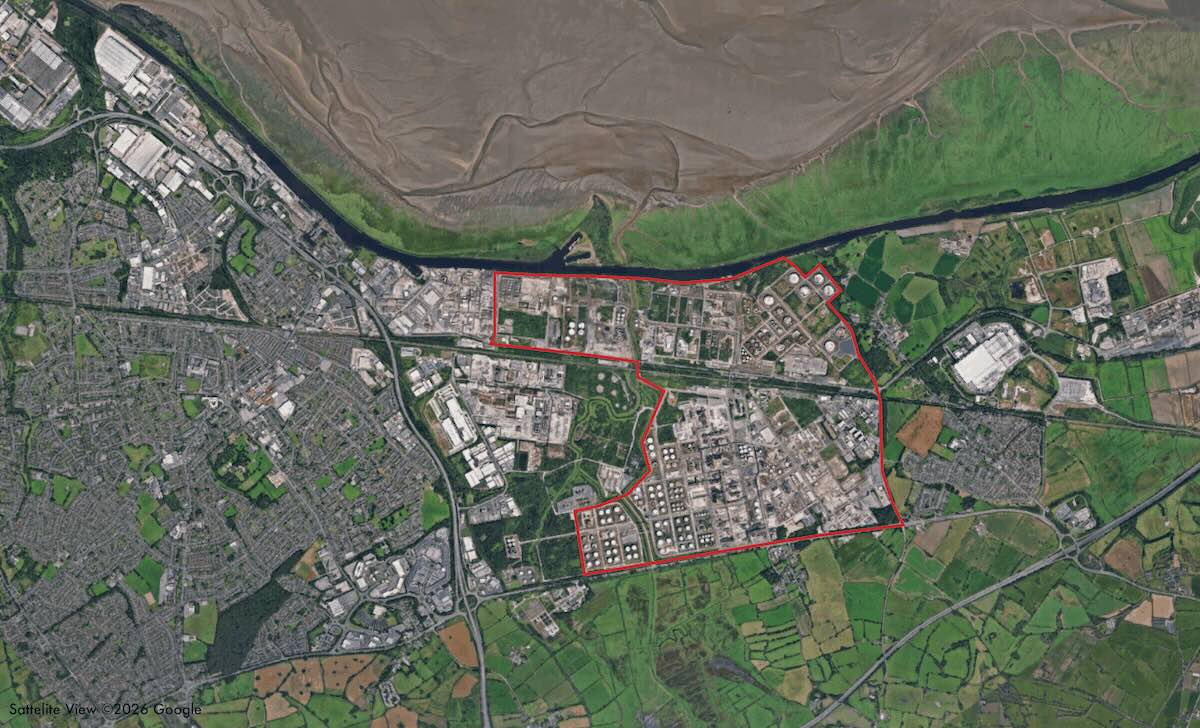
Stanlow is Britain's second-largest oil refinery, designated strategically important by the government after the Second World War. Ellesmere Port sits immediately to its west. Residents report strong smells, unknown dust, headaches, burning throats, and chest pain, and the surrounding area has reportedly recorded a cancer rate somewhere in the region of 15–20% above the national average. This figure does not, in itself, establish a causal link to the refinery and should be treated with caution rather than certainty, but, alongside the volume and consistency of residents' health complaints, it warrants far closer investigation than it has so far received.
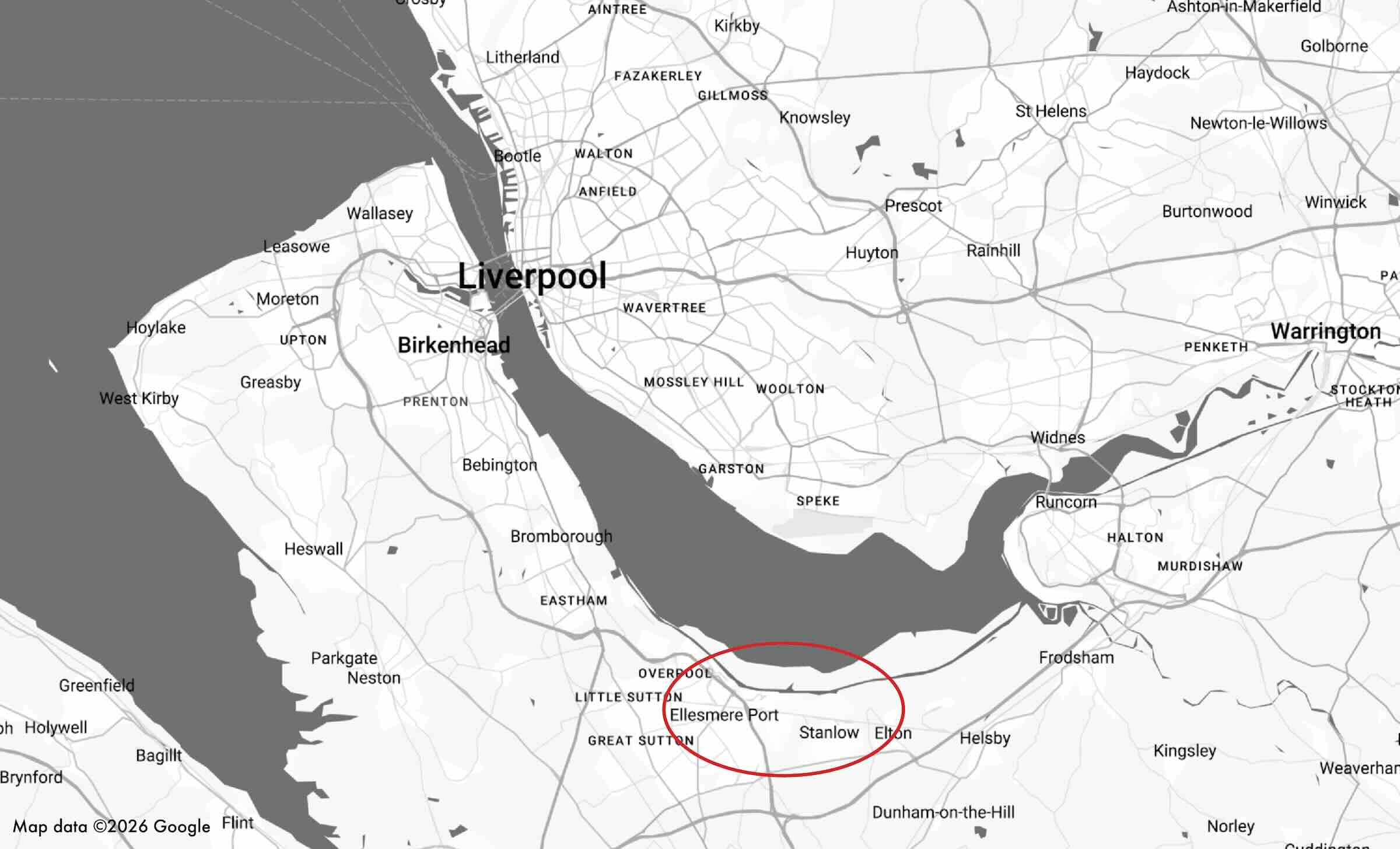
The refining process releases a known suite of toxins, including benzene, a group 1 carcinogen, along with other volatile organic compounds, sulphur dioxide, and fine particulates. Yet almost none of this is independently measured. Two monitoring stations record only a fraction of the pollutants. The refinery reports its own emissions using methods never designed to capture what residents actually breathe. And since 2018, it has operated without a meaningful upper limit on its pollution, through exemptions extended again and again without serious challenge. Here, exclusion is no longer a line on a planning map. It is a lived spatial condition, written into the air, the landscape, and the daily experience of a town shaped by infrastructure it cannot see inside and cannot hold to account.
I came to call this condition petro-feudalism: a state in which energy infrastructure becomes so embedded and politically protected that it ceases to function as a market actor and begins to function as a governing power, a modern lord, with the regulators as its vassals and the community as tenants who never agreed to the terms.
Capitalism:
Market competition
↓
Firms produce goods
↓
Pollution treated as a side effect (“externality”)
↓
State regulates from outside
Petro-Feudalism:
Control of fixed energy infrastructure
↓
Dependence forms
↓
Pollution becomes a lived condition
↓
Corporation gains structural local influence
THE PROPOSAL: If the research revealed a community kept powerless by its inability to see and prove what it breathes, the proposal is an attempt to hand that power back.
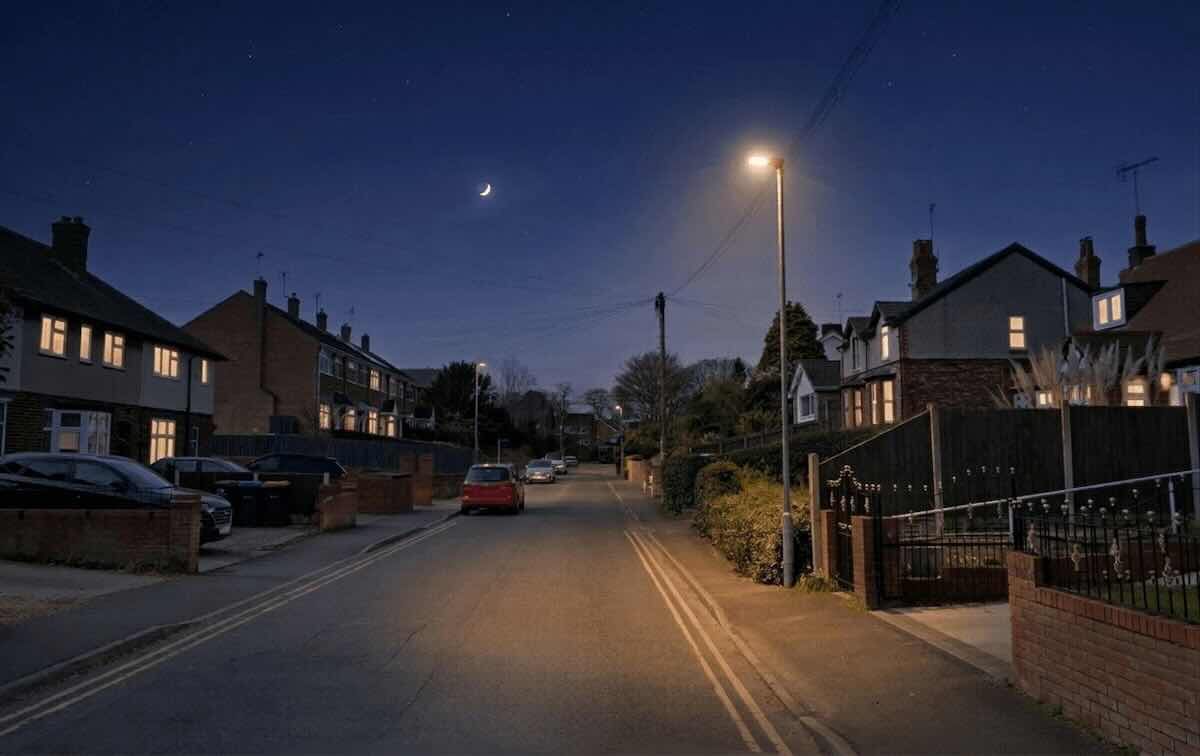
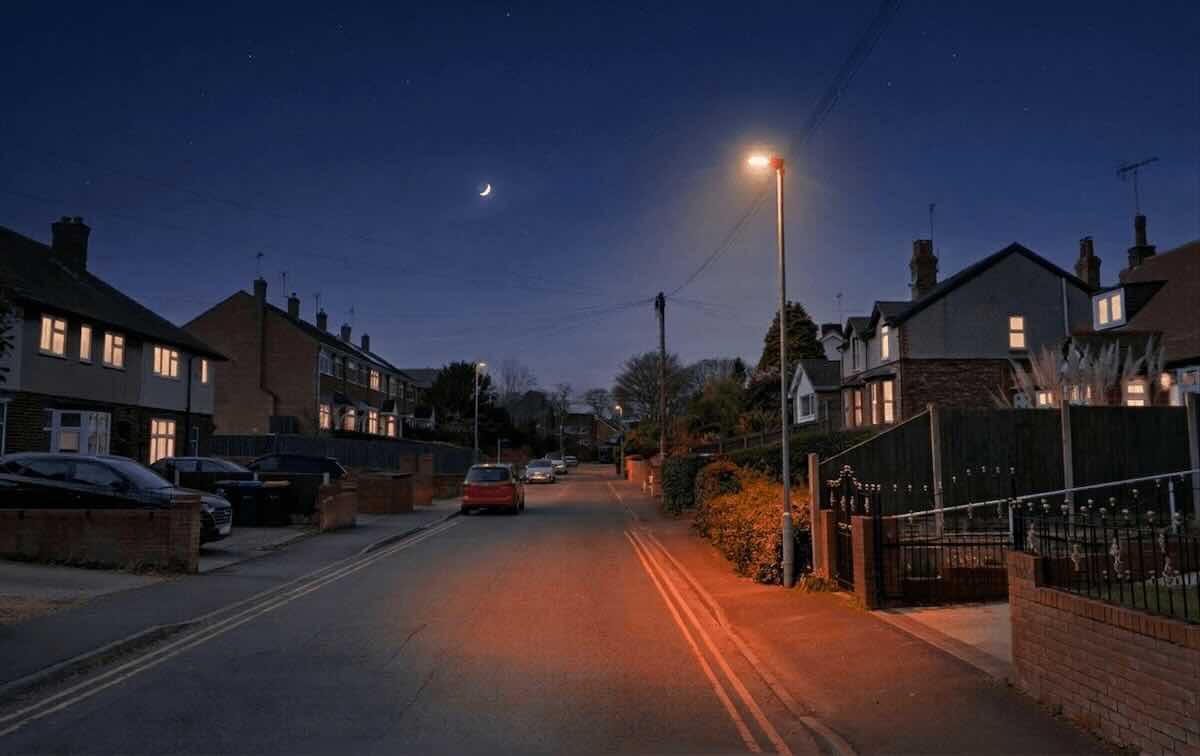
The project treats architecture as something broader than building: as the design of the systems, instruments, and spatial relationships through which a community comes to understand and reclaim its own environment. At its centre is a decentralised, open-source pollution sensor network. Low-cost sensor boxes, roughly £35 each and community-built, are mounted on lampposts, hacking existing public infrastructure to create a dense, affordable, community-owned monitoring system without the need for new construction or institutional permission.
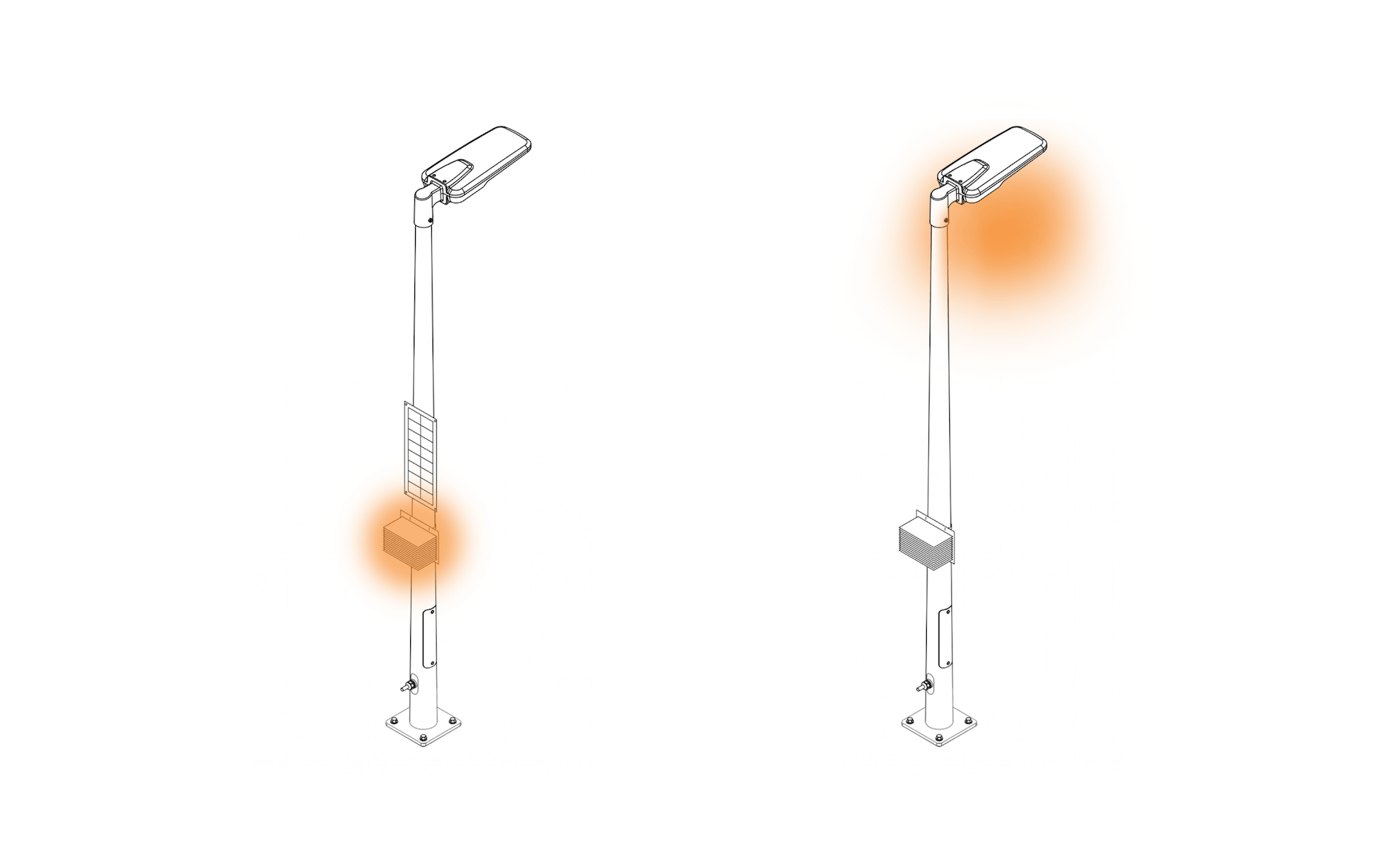
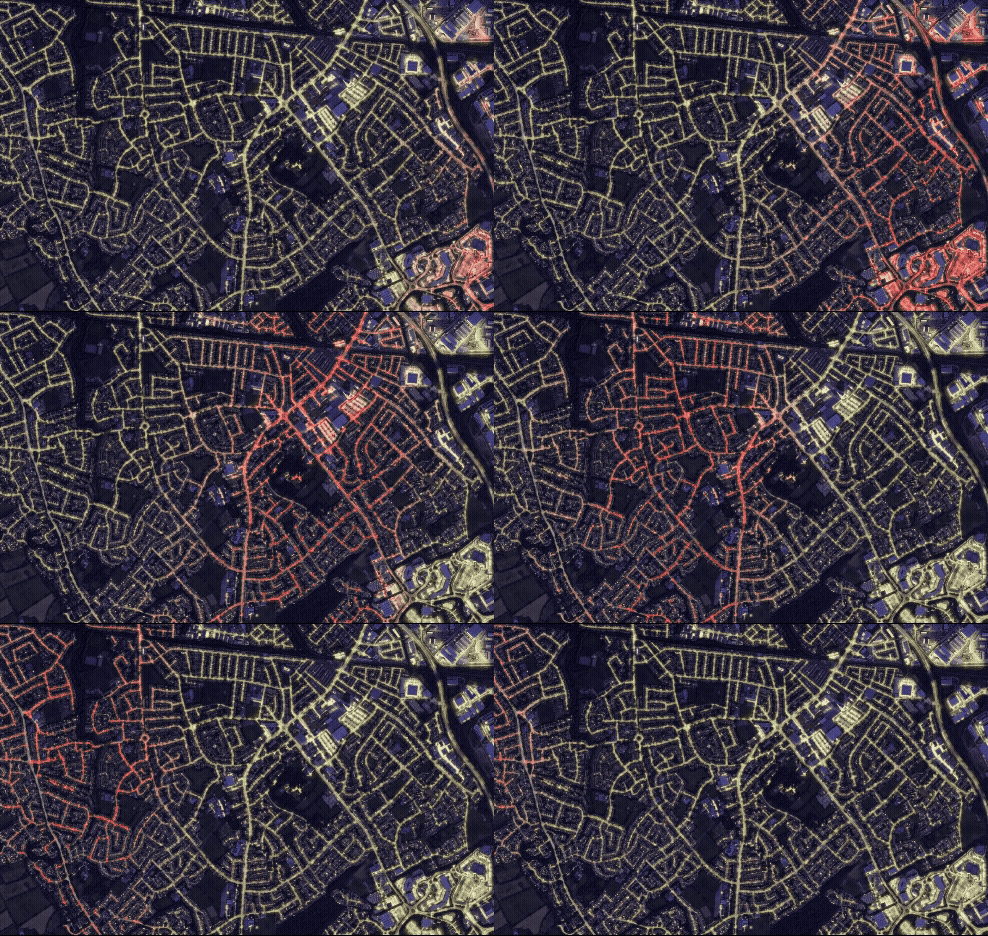
Each box measures particulates and volatile organic compounds the official stations ignore, and translates them into light in real time. Pollution ceases to be an abstract figure buried in an annual report and becomes a spatial condition, something with a location, a shape, and a presence that can be seen moving through the streets where people live. The measurement itself is transformed from the exclusive privilege of the operator and the regulator into something the community can do for itself.

THE SPECULATIVE FUTURE: Visibility alone changes nothing unless it is turned into power. The final part of the project follows that logic to its conclusion, imagining what a community might build once it holds the evidence it was so long denied.
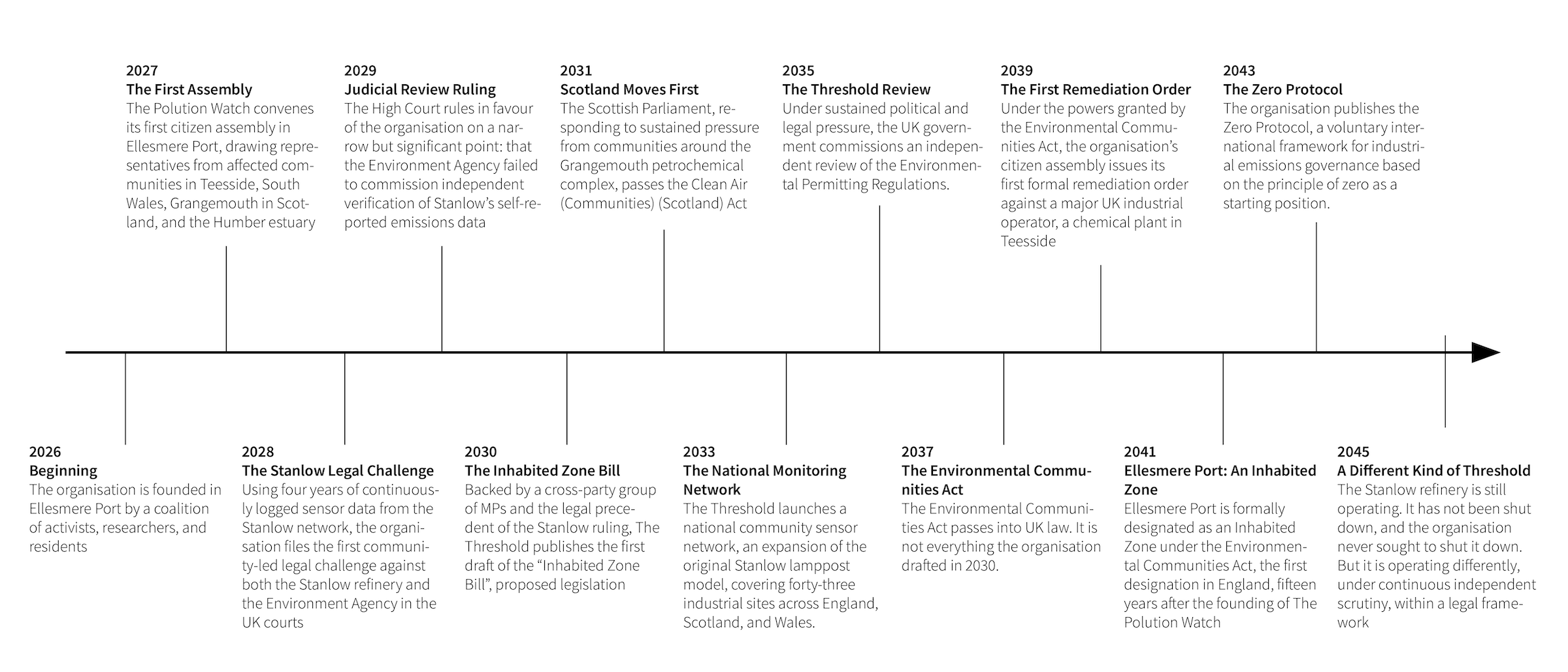
It proposes Pollution Watch: a speculative, community-governed institution founded on a single, uncompromising principle, zero. Not zero as an immediate technical demand, but zero as a starting position, the default from which any permitted deviation must be independently justified rather than quietly negotiated. It is the one threshold that cannot be lobbied, stretched, or corrupted. Pollution Watch reimagines the exclusion zone as an Inhabited Zone, a boundary drawn not outward from the industry, but around what human life requires. Across a speculative timeline reaching to 2045, it traces how a movement beginning with a £35 sensor box on a lamppost might grow into legal precedent, national legislation, and finally an international framework.
CONCLUSION: This project began with a line on a map and ends with an argument about who is allowed to draw it. Between those two points lies a journey from the abstract to the specific and back again: from the strange, negotiable geometry of the exclusion zone, to a single refinery and the town breathing in its shadow, to a proposal built from cheap sensors and public lampposts, and finally to a speculative future in which a community turns visibility into power. What holds these together is a single conviction, that the thresholds we treat as scientific facts are in truth political instruments, and that the moment a system permits some harm, it hands a lever to whoever holds the most power. Stanlow is one refinery, and Ellesmere Port is one town, but the condition they reveal is not unique to them. Petro-feudalism is a pattern, repeated wherever infrastructure becomes too embedded to challenge and communities are left to absorb the cost of its existence. The response offered here, measurement as resistance, data as organisation, zero as principle, is not a finished solution but a direction of travel, and an insistence that a different arrangement is possible. Architecture, in this project, has not meant building. It has meant designing the instruments and relationships through which people come to see, understand, and reclaim the space they live in. And if there is a single thing this work asks to be remembered by, it is the argument carried from its first page to its last: that clean air is not a privilege to be negotiated, that the line between industry and human life is drawn by someone, and that it should be drawn by the people who have to breathe across it.