REPARAPTOR
Leon Krug, Peter Jüssen, Paris Deuter - Alanus University, 2022/23
SYNOPSIS: Reparaptor was a university project centred on Morschenich-Alt, a village in the Rhenish lignite region emptied of its residents to make way for the expansion of the Hambach open-pit mine, an expansion that was then cancelled. The people left, but the excavator never came.
Rather than treating this as a brief for a building, we treated it as an opportunity to ask what a town is for once the reason for its removal disappears. Our proposal was to make Morschenich-Alt a test bed for a culture of repair, where residents take an active part in rebuilding it and architects work as facilitators rather than authors. The project took shape as two board games, a magazine of over 100 pages written from ten years in the future, and the design for a community repair hub built from foraged and recycled material. Each was a way of arguing the same thing: that the fastest route to renewal in a place like this runs through the people and the material already there.
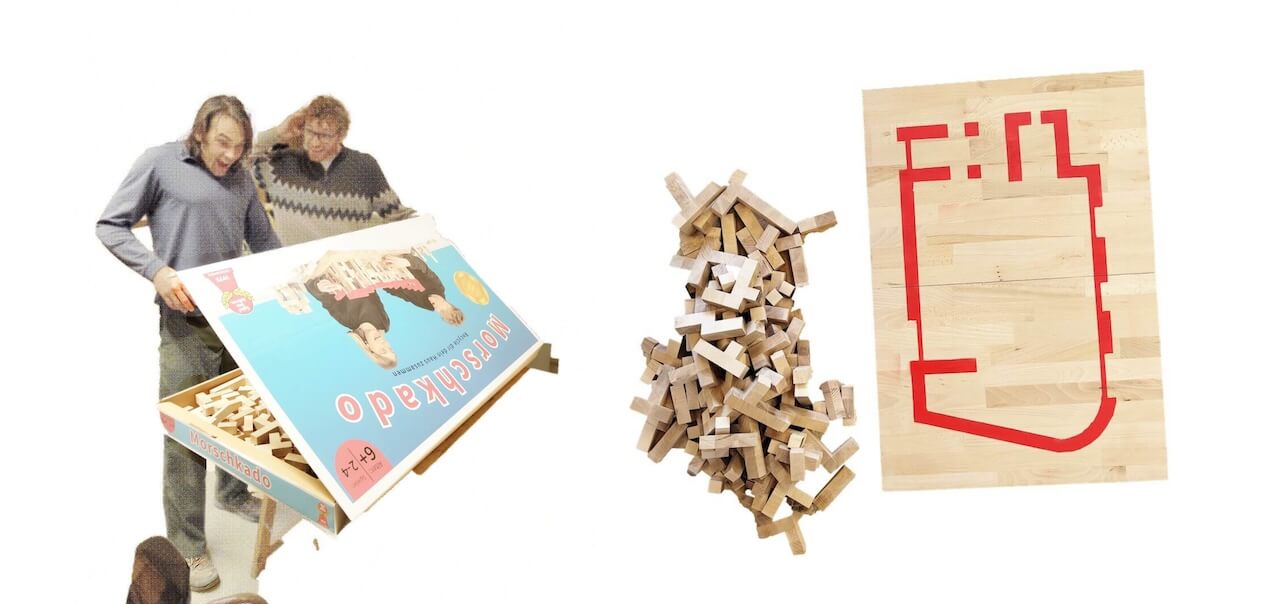
THE GAMES: We began with games, drawing on the board games of the 1980s and 90s, because a game makes repair something you do rather than something you are told about. Repair is a process, not an outcome, and a game is one of the few formats that facilitate that.
In “Morschkado”, players dismantle an existing building and use its parts to construct a new one, so every piece gained is a piece taken from somewhere else.
Reparisiko is a strategic card game in which players face continual damage to their house and must repair it with whatever improvised means they have. Nobody wins by building well. They win by keeping something standing.

Both worked better than expected as tools for conversation. Reparisiko was shown at an exhibition on the future of Morschenich-Alt and the surrounding region, where it drew real interest from residents, and it is still played in our studio.
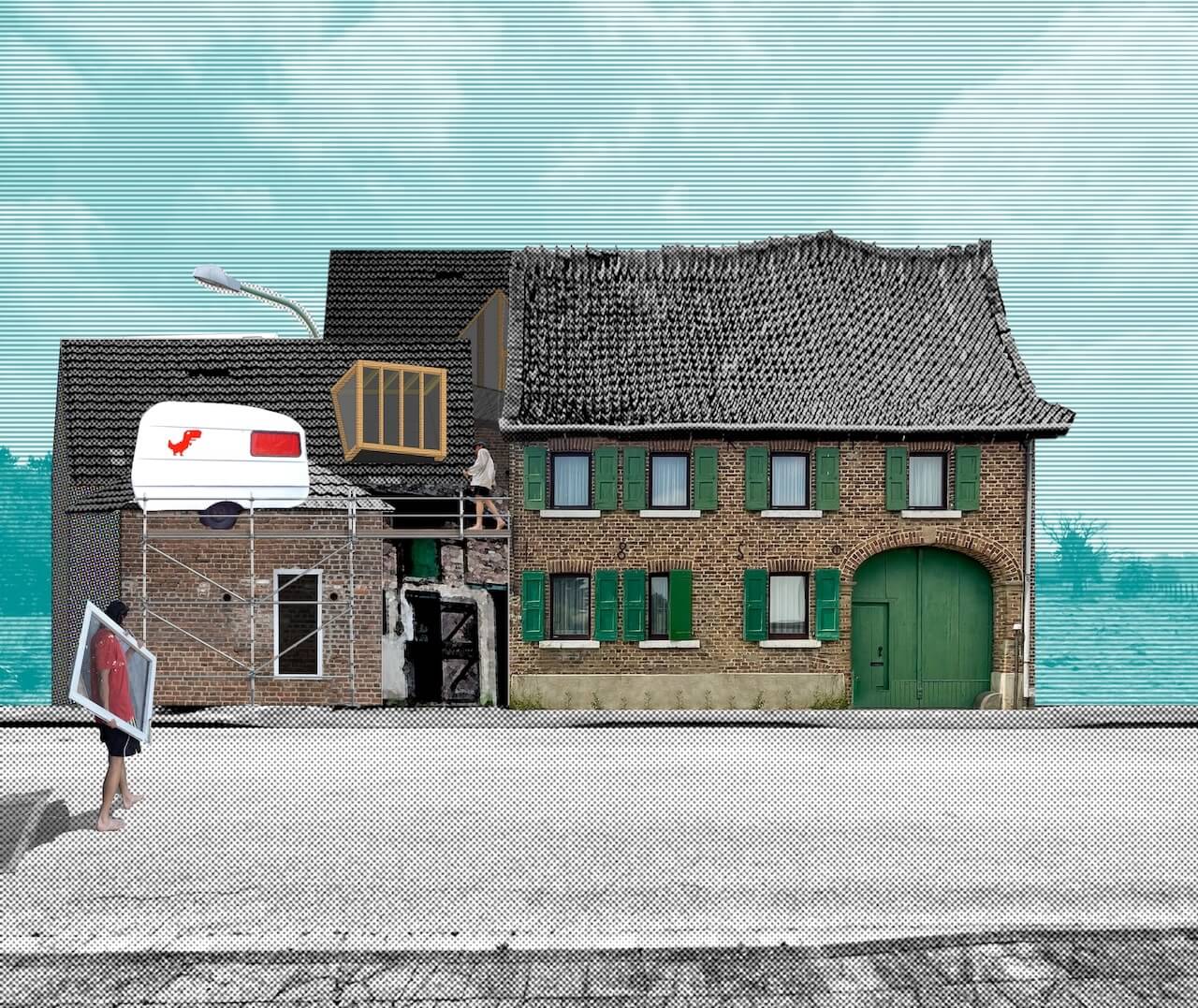
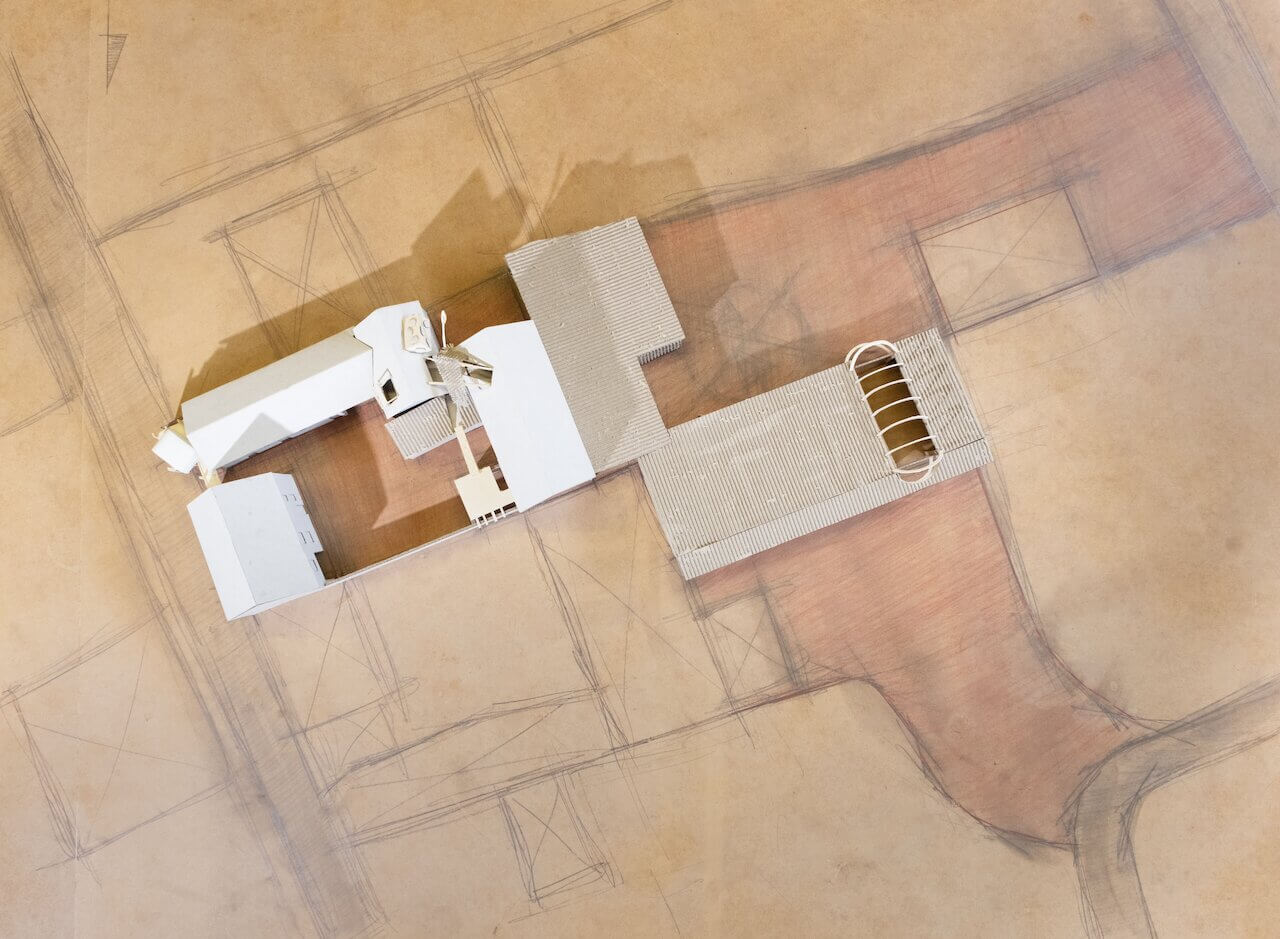
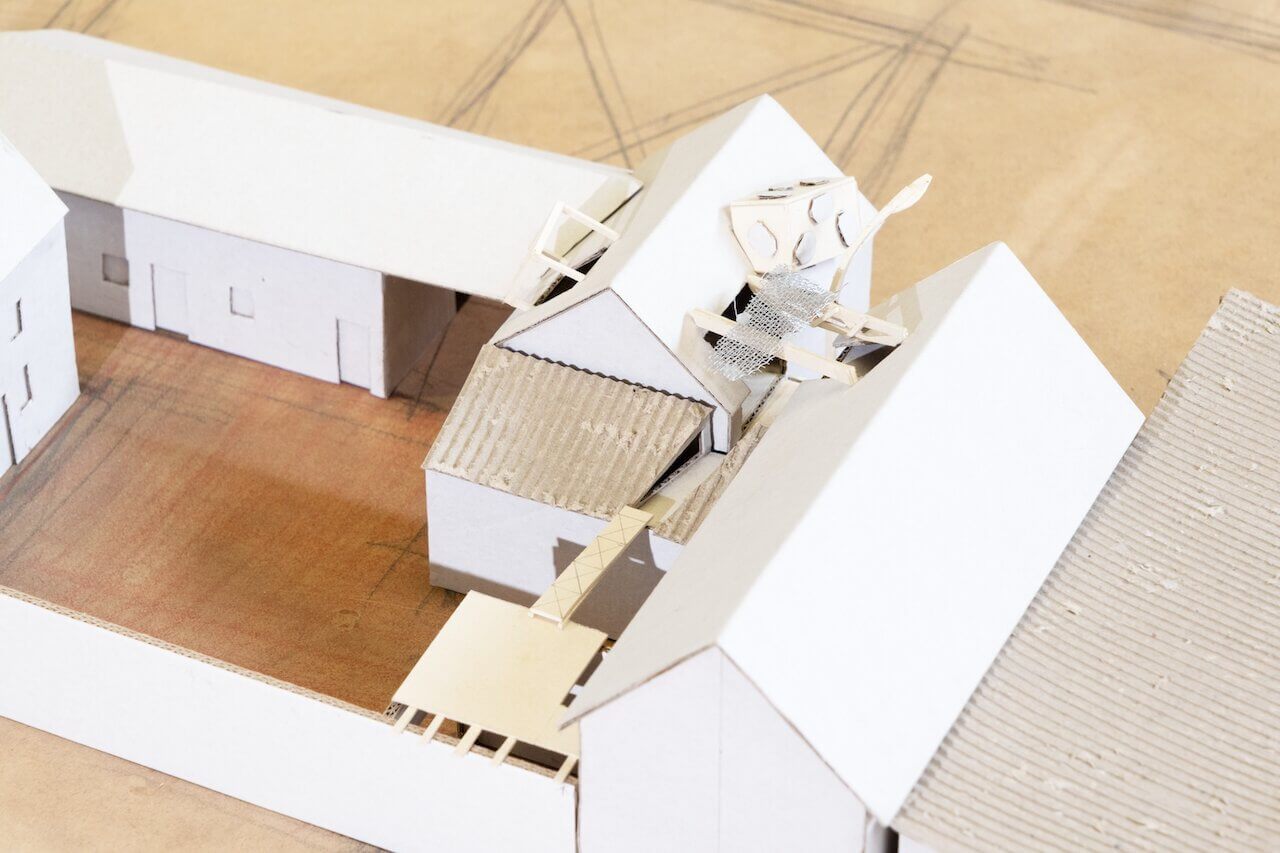
THE MAGAZINE: The next phase was a magazine about the emerging culture of repair, written as a retrospective from Morschenich-Alt ten years in the future. Writing forward about a place like this produces a proposal, writing backwards produces a history, and a history invites the reader to work out how it happened. The magazine looks back at the present day and documents how repair took root.The magazine set out the construction timeline for the repair hub that would become the village's new centre. The design works with foraged and recycled material, drawing abandoned structures from the surrounding area into a new composition.

The result is a collage in the literal sense, assembled from what the region had already discarded. In a landscape shaped by the removal of villages for coal, building from their remains is not only a way of reducing environmental impact. It is an argument about what the region owes the places it emptied.


The final section of the magazine, running to over 100 pages, collects articles on repair from several directions at once. Some are practical: how to repair or upcycle a specific building material. Others are philosophical, on what repair is and why a culture that has largely stopped doing it might want to start again. Repair is both a skill you can learn on a Saturday and a way of thinking about permanence, ownership, and waste, and a magazine can hold both in a way a set of drawings cannot.
THE REPAIR HUB: The building that emerges is a blend of found elements and materials. As the magazine tells it, the structure grew over time to meet changing needs, and it was built not by architects or contractors but by residents, using found material and basic techniques.
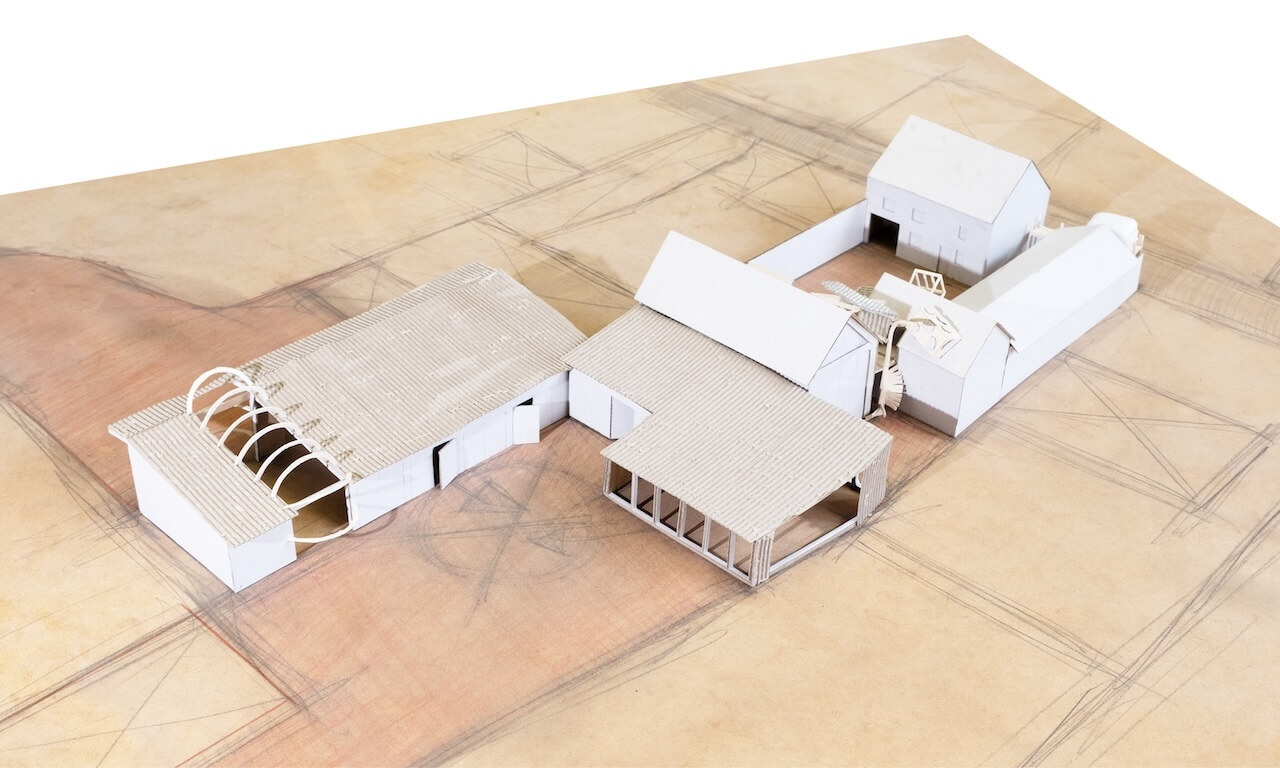
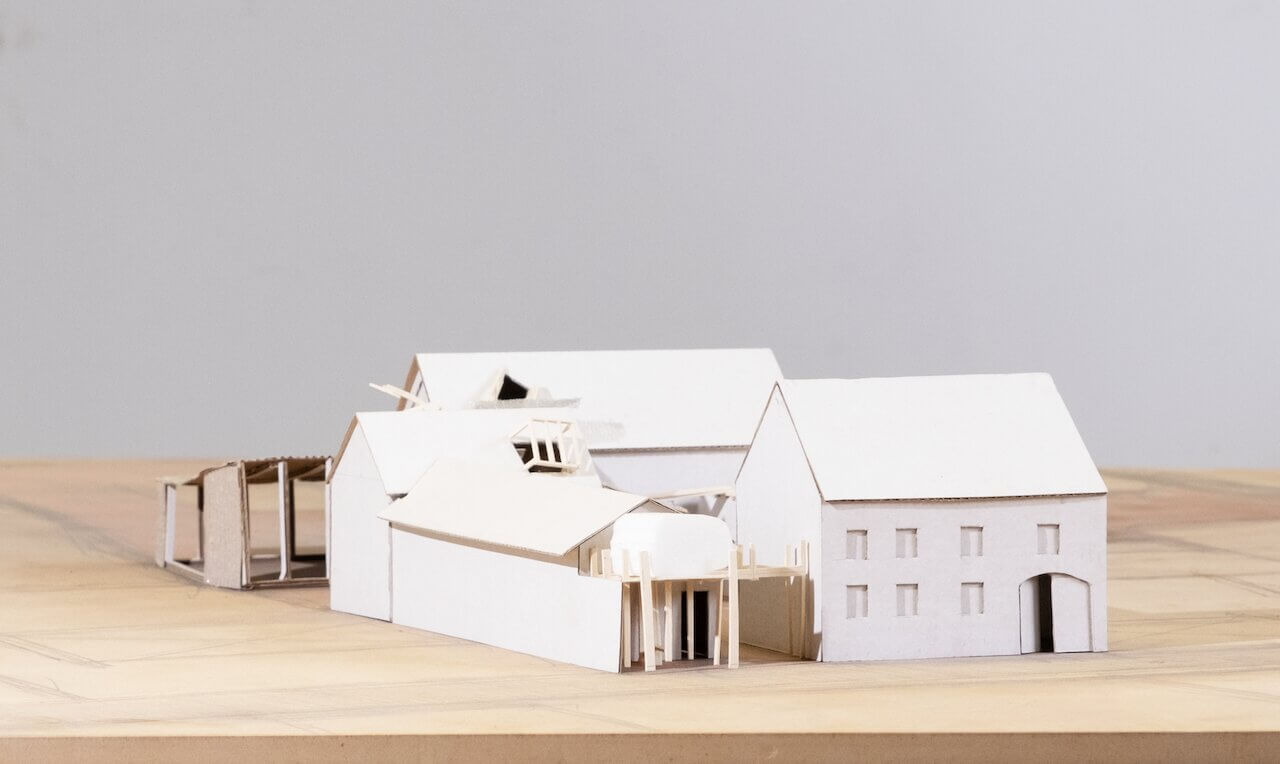
That authorship is the design decision. A building assembled by the people who use it might be rougher than one drawn by an architect, but it could also be adaptable in ways an architect cannot anticipate. The hub is not finished in any of the drawings, because a finished version would defeat it.
CONCLUSION: Morschenich-Alt is an unusual site: a village emptied for a mine that then stopped short. But the condition it represents, a place with buildings, material, and history intact and no agreed reason to continue, is one the Rhenish region will keep producing as the “Strukturwandel” plays out.
Reparaptor argues that the answer is not to design that reason from outside. It is to hand residents the tools, the material, and the permission to work it out themselves, and to let the architect be the person who makes that possible rather than the person who decides. Games, a magazine, and a hub are three attempts at the same thing: making repair legible enough that people will start.